Synopsis
Listen to the synopsis
Figaro here, Figaro there! The Barber of Seville is everywhere always ready to lend a hand, whether it’s giving someone a haircut or playing matchmaker. Especially when it comes to helping Count Almaviva win the heart of the young Rosina, jealously watched over by her guardian.
Like his hero Figaro, from Beaumarchais’ comedy, Gioacchino Rossini drives the score forward at a breakneck pace. Composed in just fourteen days and premiered at Rome’s Teatro Argentina in 1816, Il Barbiere di Siviglia is a masterpiece of opera buffa. Vocal virtuosity, youthful verve and dazzling orchestration are the ingredients that explain the success of this sparkling score.
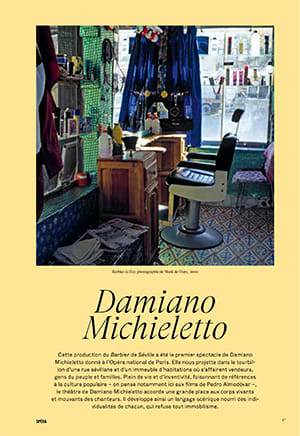
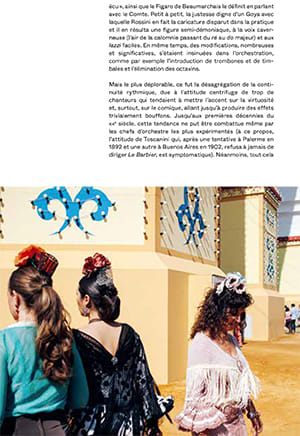
Director Damiano Michieletto sets the opera in a vibrant, everyday Spain, emphasising its effervescence with stage direction as playful as it is high-spirited.
Artists
Opera buffa in two acts (1816)
Creative team
-
Gioacchino Rossini Music (1792-1868) -
Cesare Sterbini Libretto -
Jader Bignamini Conductor -
François López-Ferrer Conductor (23, 26 sept.) -
Damiano Michieletto Director -
Paolo Fantin Set design -
Silvia Aymonino Costume design -
Fabio Barettin Lighting design -
Alessandro Di Stefano Chorus master


Cast
-
Lea Desandre Rosina (12 Sept > 10 Oct.) -
Marina Viotti Rosina (24 Oct. > 5 Nov.) -
Huw Montague Rendall Figaro (12 Sept. > 10 Oct.) -
Andrzej Filończyk Figaro (24 Oct. > 5 Nov.) -
Jack Swanson Il Conte d'Almaviva (12 Sept > 10 Oct.) -
Levy Sekgapane Il Conte d'Almaviva (24 Oct. > 5 Nov.) -
Nicola Alaimo Bartolo -
Adolfo Corrado Basilio -
Isobel Anthony Berta -
Amin Ahangaran Fiorello -
Hyunsik Zee Un ufficiale


The Paris Opera Orchestra and Chorus
Media
-
The Barber of Seville seen from the sky
Watch the video
-
5 questions about: The Barber of Seville
Discover
-
About Il Barbiere di Siviglia
Read the article
-
The Barber of Seville: the true/false story
Discover
-
Il barbiere di siviglia under the magnifying glass
See the slideshow
-
Draw-me Le Barbier de Séville
Watch the video
-
Composer: Rossini
Discover


-
Le Barbier de Séville (saison 26/27) © Albert Facelly / OnP
-
Le Barbier de Séville (saison 26/27) © Albert Facelly / OnP
-
Le Barbier de Séville (saison 26/27) © Albert Facelly / OnP
-
Le Barbier de Séville (saison 26/27) © Albert Facelly / OnP
-
Le Barbier de Séville (saison 26/27) © Albert Facelly / OnP
-
Le Barbier de Séville (saison 26/27) © Albert Facelly / OnP
-
Le Barbier de Séville (saison 26/27) © Albert Facelly / OnP
-
Le Barbier de Séville (saison 26/27) © Albert Facelly / OnP
-
Le Barbier de Séville (saison 26/27) © Albert Facelly / OnP
-
Le Barbier de Séville (saison 26/27) © Albert Facelly / OnP
-
Le Barbier de Séville (saison 26/27) © Albert Facelly / OnP
-
Le Barbier de Séville (saison 26/27) © Albert Facelly / OnP
-
Le Barbier de Séville (saison 26/27) © Albert Facelly / OnP
-
Le Barbier de Séville (saison 26/27) © Albert Facelly / OnP
-
Le Barbier de Séville (saison 26/27) © Albert Facelly / OnP
-
Le Barbier de Séville (saison 26/27) © Albert Facelly / OnP
-
Le Barbier de Séville (saison 26/27) © Albert Facelly / OnP
-
Le Barbier de Séville (saison 26/27) © Albert Facelly / OnP
-
Le Barbier de Séville (saison 26/27) © Albert Facelly / OnP
-
Le Barbier de Séville (saison 26/27) © Albert Facelly / OnP


-
Throughout the performance, conductor and orchestra never ceased to reveal the full richness of this score […] One could sense, in the pit, a profound understanding of the Rossinian style, with its highly precise and demanding conventions. This was, without a doubt, one of the evening’s great sources of satisfaction.
Cult.news, 2026 -
Huw Montague Rendall takes on the title role with infectious energy, superb Italian diction, admirable consistency across the registers, and flawless projection. […] Lea Desandre […] never seems to strain her voice in the large ensembles, singing with clarity and brilliance, but above all allows us to savour the purity of her Italian and the refreshing character of her suave, sensitive timbre. Completely committed to the role, she also delivers inventive and radiant coloratura.
Olyrix, 2026 -
This production was met with immediate enthusiasm, which has never waned throughout its various revivals. This latest run is no exception, judging by the ovation that greeted the entire cast at the final curtain.
Forum Opera, 2026


Watch online the recording from season 15/16 on Paris Opera Play, with Karine Deshayes, René Barbera, Dalibor Jenis, Carlo Lepore...
Access and services
Opéra Bastille
Place de la Bastille
75012 Paris
Public transport
Underground Bastille (lignes 1, 5 et 8), Gare de Lyon (RER)
Bus 29, 69, 76, 86, 87, 91, N01, N02, N11, N16
Calculate my routeCar park
Parking Indigo Opéra Bastille 1 avenue Daumesnil 75012 Paris
Book your spot at a reduced price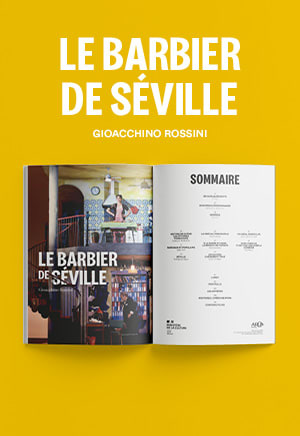
-
Cloakrooms
Free cloakrooms are at your disposal. The comprehensive list of prohibited items is available here.
-
Bars
Reservation of drinks and light refreshments for the intervals is possible online up to 24 hours prior to your visit, or at the bars before each performance.
-
Parking
You can park your car at the Indigo Opéra Bastille. It is located at 1 avenue Daumesnil, 75012 Paris.
In both our venues, discounted tickets are sold at the box offices from 30 minutes before the show:
- €35 tickets for under-28s, unemployed people (with documentary proof less than 3 months old) and senior citizens over 65 with non-taxable income (proof of tax exemption for the current year required)
- €70 tickets for senior citizens over 65
Get samples of the operas and ballets at the Paris Opera gift shops: programmes, books, recordings, and also stationery, jewellery, shirts, homeware and honey from Paris Opera.
Opéra Bastille
- Open 1h before performances and until performances end
- Get in from within the theatre’s public areas
- For more information: +33 1 40 01 17 82
Online
Opéra Bastille
Place de la Bastille
75012 Paris
Public transport
Underground Bastille (lignes 1, 5 et 8), Gare de Lyon (RER)
Bus 29, 69, 76, 86, 87, 91, N01, N02, N11, N16
Calculate my routeCar park
Parking Indigo Opéra Bastille 1 avenue Daumesnil 75012 Paris
Book your spot at a reduced price
-
Cloakrooms
Free cloakrooms are at your disposal. The comprehensive list of prohibited items is available here.
-
Bars
Reservation of drinks and light refreshments for the intervals is possible online up to 24 hours prior to your visit, or at the bars before each performance.
-
Parking
You can park your car at the Indigo Opéra Bastille. It is located at 1 avenue Daumesnil, 75012 Paris.
In both our venues, discounted tickets are sold at the box offices from 30 minutes before the show:
- €35 tickets for under-28s, unemployed people (with documentary proof less than 3 months old) and senior citizens over 65 with non-taxable income (proof of tax exemption for the current year required)
- €70 tickets for senior citizens over 65
Get samples of the operas and ballets at the Paris Opera gift shops: programmes, books, recordings, and also stationery, jewellery, shirts, homeware and honey from Paris Opera.
Opéra Bastille
- Open 1h before performances and until performances end
- Get in from within the theatre’s public areas
- For more information: +33 1 40 01 17 82
Online


Partners