Synopsis
Listen to the synopsis
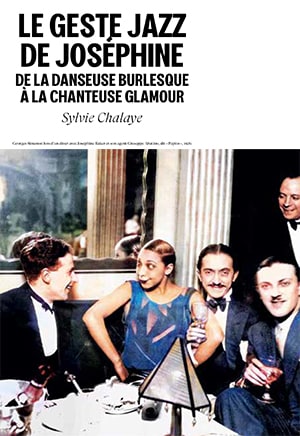
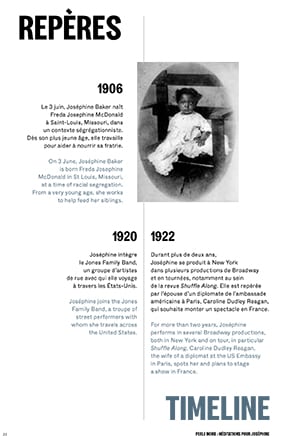
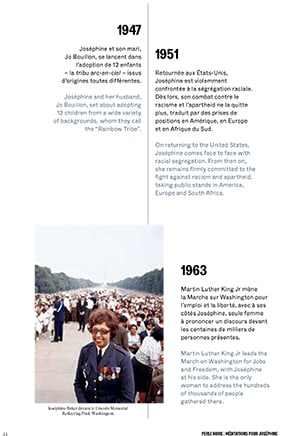
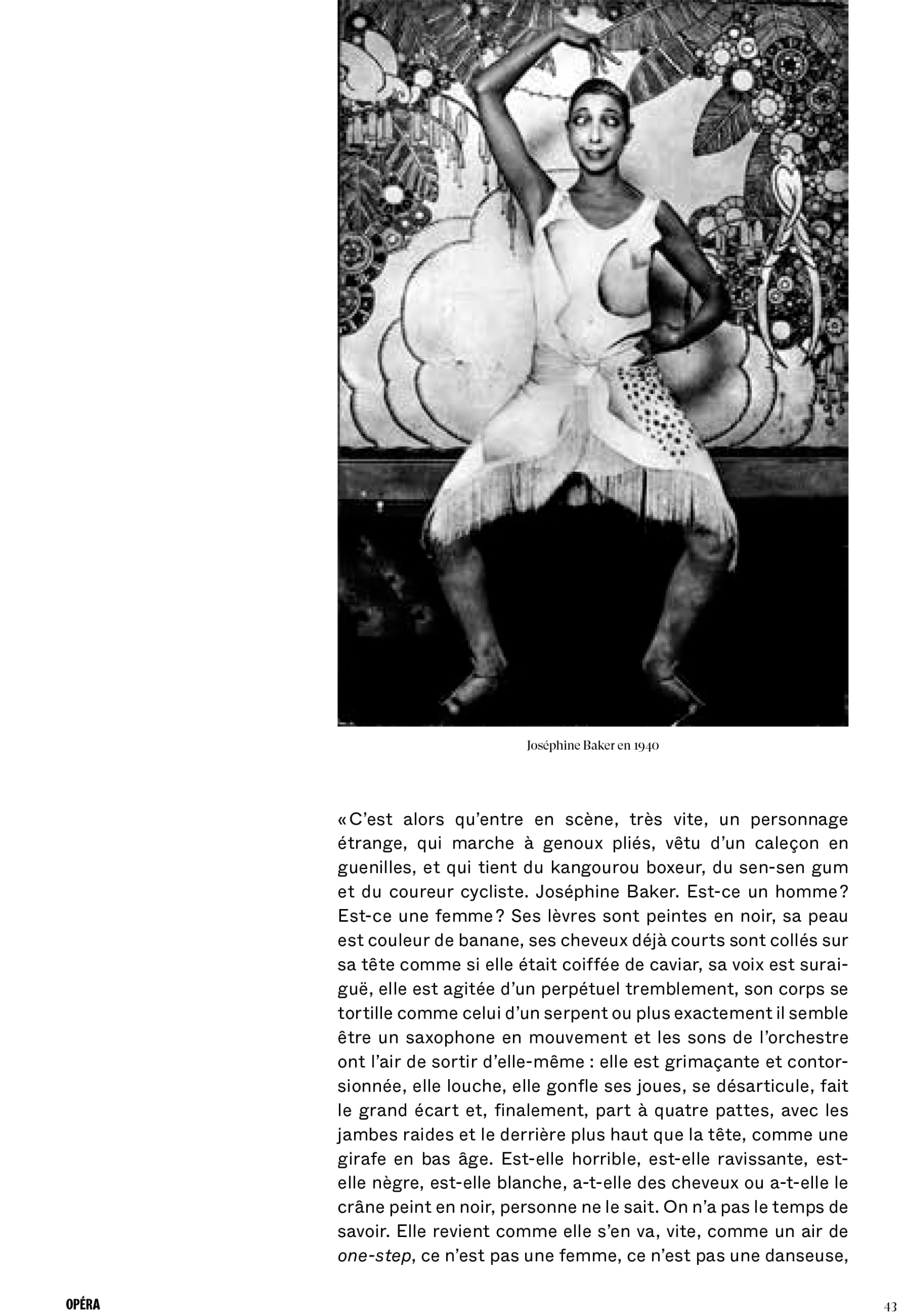
Singer, dancer and actress Josephine Baker, the beloved artist of Paris during the Roaring Twenties, was far more than that. There was also her love for France, where, as a Black woman, she found a form of liberation, her involvement in the Resistance and her fight for civil rights.
On the 120th anniversary of her birth, the Paris Opera opens its season by paying tribute to her with a production directed by Peter Sellars.
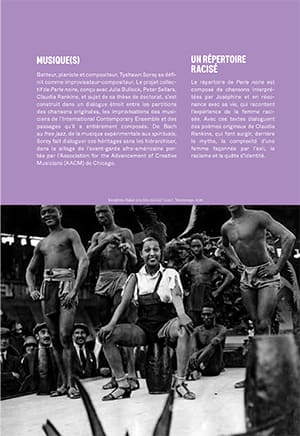
Perle Noire reveals the inner world hidden behind the radiant smile of Josephine Baker, who entered the Pantheon in 2021. The jazzy score by Tyshawn Sorey, who conducts the musicians of the International Contemporary Ensemble on stage, highlights the exemplary and inspiring struggle of this artist who embraced stereotypes all the better to challenge them and ultimately find freedom within an imposed identity.
Duration : 1h45 no interval
Language : English
Surtitle : French / English
Artists
Musical theatre (2016)
Creative team
-
Tyshawn Sorey Music -
Claudia Rankine Spoken texts -
Julia Bullock Concept -
Peter Sellars Director -
Carlos Soto Costume design -
James F. Ingalls Lighting design -
Jody Elff Sound design -
Michael Schumacher Movement director -
Antonio Cuenca Ruiz Dramaturgy


Cast
-
Julia Bullock Voice -
Tyshawn Sorey Piano and percussion -
Daniel Lippel Electric guitar -
Alice Teyssier Flute -
Jennifer Curtis Violin -
Rebekah Heller Bassoon -
Travis Laplante Saxophone


International Contemporary Ensemble
Production created at the Dutch National Opera, Amsterdam
Media
-
Julia Bullock and Tyshawn Sorey about Perle Noire : Meditations for Joséphine.
Watch the video
-
The life of Joséphine Baker
Read the article


-
"Perle noire : méditations pour Joséphine" (saison 26/27) © Benoite Fanton / OnP
-
"Perle noire : méditations pour Joséphine" (saison 26/27) © Benoite Fanton / OnP
-
"Perle noire : méditations pour Joséphine" (saison 26/27) © Benoite Fanton / OnP
-
"Perle noire : méditations pour Joséphine" (saison 26/27) © Benoite Fanton / OnP
-
"Perle noire : méditations pour Joséphine" (saison 26/27) © Benoite Fanton / OnP
-
"Perle noire : méditations pour Joséphine" (saison 26/27) © Benoite Fanton / OnP
-
"Perle noire : méditations pour Joséphine" (saison 26/27) © Benoite Fanton / OnP
-
"Perle noire : méditations pour Joséphine" (saison 26/27) © Benoite Fanton / OnP
-
"Perle noire : méditations pour Joséphine" (saison 26/27) © Benoite Fanton / OnP
-
"Perle noire : méditations pour Joséphine" (saison 26/27) © Benoite Fanton / OnP
-
"Perle noire : méditations pour Joséphine" (saison 26/27) © Benoite Fanton / OnP
-
"Perle noire : méditations pour Joséphine" (saison 26/27) © Benoite Fanton / OnP
-
"Perle noire : méditations pour Joséphine" en répétitions (saison 26/27) © Elena Bauer / OnP
-
© Elena Bauer / OnP
-
"Perle noire : méditations pour Joséphine" en répétitions (saison 26/27) © Elena Bauer / OnP
-
"Perle noire : méditations pour Joséphine" en répétitions (saison 26/27) © Elena Bauer / OnP
-
© Elena Bauer / OnP
-
"Perle noire : méditations pour Joséphine" en répétitions (saison 26/27) © Elena Bauer / OnP
-
"Perle noire : méditations pour Joséphine" en répétitions (saison 26/27) © Elena Bauer / OnP
-
"Perle noire : méditations pour Joséphine" en répétitions (saison 26/27) © Elena Bauer / OnP
-
"Perle noire : méditations pour Joséphine" en répétitions (saison 26/27) © Elena Bauer / OnP
-
"Perle noire : méditations pour Joséphine" en répétitions (saison 26/27) © Elena Bauer / OnP
-
"Perle noire : méditations pour Joséphine" en répétitions (saison 26/27) © Elena Bauer / OnP
-
"Perle noire : méditations pour Joséphine" en répétitions (saison 26/27) © Elena Bauer / OnP
-
© Elena Bauer / OnP
-
© Elena Bauer / OnP
-
"Perle noire : méditations pour Joséphine" en répétitions (saison 26/27) © Elena Bauer / OnP
-
"Perle noire : méditations pour Joséphine" en répétitions (saison 26/27) © Elena Bauer / OnP
-
"Perle noire : méditations pour Joséphine" en répétitions (saison 26/27) © Elena Bauer / OnP
-
"Perle noire : méditations pour Joséphine" en répétitions (saison 26/27) © Elena Bauer / OnP
-
"Perle noire : méditations pour Joséphine" en répétitions (saison 26/27) © Elena Bauer / OnP
-
"Perle noire : méditations pour Joséphine" en répétitions (saison 26/27) © Elena Bauer / OnP


-
Sorey is masterful, whether at the piano, drawing out its resonant effects, or at the drums and percussion, scratching the air with bursts of noise. […] Last but not least, Julia Bullock’s “composition” is as unsettling as it is striking, probing Baker’s heart and soul with a propensity for melancholy.
Diapason, 2026 -
Tyshawn Sorey’s musical work is remarkable […], transforming Joséphine Baker’s repertoire into a dazzling oratorio that blends jazz, blues and classical music. The International Contemporary Ensemble accompanying him makes every note shimmer. As for Julia Bullock, her magnetic presence is utterly spellbinding.
Les Echos, 2026 -
Julia Bullock is remarkable in the role of this allegorical figure. She can do it all act, dance and sing giving rhythm and shape to this extended musical monologue.
L’Humanité, 2026
-
Tyshawn Sorey’s music, a leading voice in a field that recognises no boundaries between jazz and contemporary music, nor between composition and improvisation, deconstructs established references to create a dissonant sound world. […] As for Julia Bullock, the soprano lays her soul bare on stage. Not only does her voice move you to the core, whether in lyrical singing, blues-inflected style or spoken declamation, but her physical expression and gaze are equally charged with intensity.
Le Figaro,2026


Access and services
Palais Garnier
Place de l'Opéra
75009 Paris
Public transport
Underground Opéra (lignes 3, 7 et 8), Chaussée d’Antin (lignes 7 et 9), Madeleine (lignes 8 et 14), Auber (RER A)
Bus 20, 21, 27, 29, 32, 45, 52, 66, 68, 95, N15, N16
Calculate my routeCar park
Parking Q-Park Edouard VII and Q-Park Meyerbeer 16 rue Bruno Coquatrix 4 rue de la Chaussée d'Antin 75009 Paris
Book your spot at a reduced price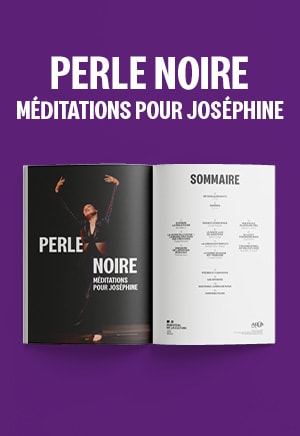
-
Cloakrooms
Free cloakrooms are at your disposal. The comprehensive list of prohibited items is available here.
-
Bars
Reservation of drinks and light refreshments for the intervals is possible online up to 24 hours prior to your visit, or at the bars before each performance.
At the Palais Garnier, buy €10 tickets for seats in the 6th category (very limited visibility, two tickets maximum per person) on the day of the performance at the Box offices.
In both our venues, discounted tickets are sold at the box offices from 30 minutes before the show:
- €35 tickets for under-28s, unemployed people (with documentary proof less than 3 months old) and senior citizens over 65 with non-taxable income (proof of tax exemption for the current year required)
- €70 tickets for senior citizens over 65
Get samples of the operas and ballets at the Paris Opera gift shops: programmes, books, recordings, and also stationery, jewellery, shirts, homeware and honey from Paris Opera.
Palais Garnier
- Every day from 10 a.m. to 6:30 p.m. and until performances end
- Get in from Place de l’Opéra or from within the theatre’s public areas
- For more information: +33 1 53 43 03 97
Online
Palais Garnier
Place de l'Opéra
75009 Paris
Public transport
Underground Opéra (lignes 3, 7 et 8), Chaussée d’Antin (lignes 7 et 9), Madeleine (lignes 8 et 14), Auber (RER A)
Bus 20, 21, 27, 29, 32, 45, 52, 66, 68, 95, N15, N16
Calculate my routeCar park
Parking Q-Park Edouard VII and Q-Park Meyerbeer 16 rue Bruno Coquatrix 4 rue de la Chaussée d'Antin 75009 Paris
Book your spot at a reduced price
-
Cloakrooms
Free cloakrooms are at your disposal. The comprehensive list of prohibited items is available here.
-
Bars
Reservation of drinks and light refreshments for the intervals is possible online up to 24 hours prior to your visit, or at the bars before each performance.
At the Palais Garnier, buy €10 tickets for seats in the 6th category (very limited visibility, two tickets maximum per person) on the day of the performance at the Box offices.
In both our venues, discounted tickets are sold at the box offices from 30 minutes before the show:
- €35 tickets for under-28s, unemployed people (with documentary proof less than 3 months old) and senior citizens over 65 with non-taxable income (proof of tax exemption for the current year required)
- €70 tickets for senior citizens over 65
Get samples of the operas and ballets at the Paris Opera gift shops: programmes, books, recordings, and also stationery, jewellery, shirts, homeware and honey from Paris Opera.
Palais Garnier
- Every day from 10 a.m. to 6:30 p.m. and until performances end
- Get in from Place de l’Opéra or from within the theatre’s public areas
- For more information: +33 1 53 43 03 97