My special offers

Prices

    0
    300
    0€
    300€

Show / Event

Venue

Experience

Calendar

  • Between   and 

Prices

Ruth Walz / Dutch National Opera

Opera

New

Perle Noire: Meditations for Joséphine

Palais Garnier

from 09 to 19 September 2026

from €155 to €205

1h50 no interval

Synopsis

Listen to the synopsis

0:00 / 0:00

Singer, dancer and actress Josephine Baker, the beloved artist of Paris during the Roaring Twenties, was far more than that. There was also her love for France, where, as a Black woman, she found a form of liberation, her involvement in the Resistance and her fight for civil rights. 


On the 120th anniversary of her birth, the Paris Opera opens its season by paying tribute to her with a production directed by Peter Sellars.


Perle Noire reveals the inner world hidden behind the radiant smile of Josephine Baker, who entered the Pantheon in 2021. The jazzy score by Tyshawn Sorey, who conducts the musicians of the International Contemporary Ensemble on stage, highlights the exemplary and inspiring struggle of this artist who embraced stereotypes all the better to challenge them and ultimately find freedom within an imposed identity.

Duration : 1h50 no interval

Language : English

Surtitle : French / English

Musical discourse of liberation

Ever since I began developing my own compositional language, my music has been shaped by a dialogue between formal composition and improvisation what I prefer to call spontaneous music. I see this as the most enriching element of the musical act, both for oneself and for others. It has therefore become the true cornerstone of my compositional methodology and my musical voice.

Perle Noire: Meditations for Joséphine is based on a flexible score that brings together composed music and spontaneous music. I therefore tend to describe Perle Noire as a musical work possessing a kind of three-dimensionality. First, there is the written score, which provides a common foundation for everyone. Then come the indications for spontaneity embedded within that score. Finally, there is a third level, where we move freely through the musical landscape. As a result, not everyone can perform this music. Although I generally use traditional Western notation, I expect my musicians to know when to leave the page behind. The performers I work with must therefore remain constantly alert even with the score in front of them. What I seek to create is an odyssey that is at once serene, intense, and dangerously vertiginous. To me, this reflects the very feeling of being alive, while demanding absolute artistic authenticity. In this way, the work continues to evolve through the uniquely heightened perspectives of the musicians who perform it, shifting artistic authority away from a single individual and toward an entire constellation of personalities.

For Perle Noire, Peter, Julia, and I initially envisioned an intimate portrait of Joséphine a portrait that would explore the inner turmoil of her heart. The piece was therefore never intended as an exercise in impersonation or disguise; on the contrary, it sought to avoid becoming a merely nostalgic excursion. We wanted to acknowledge her as a vulnerable human being, confronted with marginalization and with the suffering and violence inflicted upon Black people. The project thus became less a portrait than a deconstruction of the myth.

My task was to create songs that would stand at a considerable distance from Baker's original recordings. I wanted listeners to pay close attention to the words she sang. My aim was to reveal a side of her that was already present in some of her lyrics, yet concealed beneath light-hearted melodies, at times conventional arrangements, and lush harmonies. I therefore had to resist superficial listening. The emotional complexity of Baker's life and texts should not merely be noticed by the audience I wanted it to be felt. So that Joséphine herself, along with the messages she carried, could truly be heard. To intensify this underlying tragedy, I chose to slow the tempi, stretch the rhythm, and introduce raw sonorities ranging from the barely audible to pure silence.

For some, the music of Perle Noire therefore failed to be culturally "authentic." Some critics even argued that my arrangements of Baker's iconic songs were "painfully monochromatic everything she herself was not." But Perle Noire rejects the very notion of a canonical Joséphine Baker. In every possible way, we sought to free her from the violence of the white gaze, so that her story could finally be told in all its complexity.

For many of those critics, however, the music of Perle Noire was simply not "Black enough." Yet my work has never been about being merely "authentically Black." I never wanted to force Baker into the mold of the stereotypical Black artist, any more than I wish to fit that stereotype myself. The fact that these critics expected me, simply because I am a Black composer, to "stay in my lane" only underscores how deeply the simplistic racial narratives imposed upon Baker continue to resonate today.

Tyshawn Sorey

Show chronology

Timeline

  • 1906
    On June 3, Joséphine Baker is born Freda Josephine McDonald in St. Louis, Missouri, to a mother who was formerly enslaved. From a very young age, she works to help feed her siblings.  
    Perle Noire: Meditations for Joséphine
  • 1920

    Joséphine joins the Jones Family Band, a group of street performers with whom she travels across the United States.

  • 1922

    For more than two years, Joséphine performed in New York in several Broadway productions and touring shows. She was discovered by Caroline Dudley Reagan, the wife of a diplomat at the American Embassy in Paris, who wanted to create a show in France.

  • 1925

    Assembled and brought together by Reagan, the Revue Nègre and its African American performers made their debut at the Théâtre des Champs-Élysées. Joséphine was the star of the show, notably with her performance of “La Danse sauvage,” a Charleston danced topless while wearing a belt of bananas, set against a savanna backdrop.

    Perle Noire: Meditations for Joséphine
  • 1927

    The Folies Bergère signed Joséphine for the revue La Folie du jour, where she continued to wear her famous banana belt, alongside the African dancer Féral Benga, who played the tam-tam, and a cheetah. That same year, she appeared in her first film, The Siren of the Tropics.

  • 1944

    Since the beginning of the Second World War, Joséphine had been involved in various activities within the Resistance. She was officially commissioned as a second lieutenant in the Air Force.

    Perle Noire: Meditations for Joséphine
  • 1947

    Joséphine and her husband, Jo Bouillon, began adopting 12 children — the “Rainbow Tribe” — from a variety of different backgrounds.

  • 1951

    Returning to the United States, Joséphine was confronted with the harsh reality of racial segregation. From then on, her fight against racism and apartheid became a lifelong commitment, expressed through her outspoken positions in America, Europe, and South Africa.

  • 1963

    Martin Luther King Jr. led the March on Washington for Jobs and Freedom, with Joséphine by his side. She was the only woman to deliver a speech before the hundreds of thousands of people in attendance.

    Perle Noire: Meditations for Joséphine
  • 1965

    Joséphine was officially invited by Fidel Castro to Cuba, an island where she had already performed several times and whose struggle against American imperialism she had always supported.

  • 1975

    Less than a month after the beginning of her show celebrating her fifty-year career, Joséphine died in Paris on April 12.

    Perle Noire: Meditations for Joséphine
  • 2021

    Honored with numerous awards throughout her lifetime (the Croix de Guerre, the Resistance Medal, and the Legion of Honour), Joséphine was once again celebrated by the Republic on the occasion of her entry into the Panthéon.

    Perle Noire: Meditations for Joséphine

Artists

Musical theatre (2016)

Creative team

International Contemporary Ensemble
Production created at the Dutch National Opera, Amsterdam

Media

  • The life of Joséphine Baker

    The life of Joséphine Baker

    Read the article

© Aurimages cinema

The life of Joséphine Baker

Read the article

07 min

The life of Joséphine Baker

By Alice de la Bouillerie

An iconic figure of the Roaring Twenties in Paris, Josephine Baker is often reduced to the image of the Black dancer in the banana skirt, her bare body given over to a frenzied dance before a white audience. And yet Josephine Baker left her mark on the artistic history of France and bequeathed a cultural and political legacy that far transcends this image. Looking back on her life reveals a woman of many causes who fought passionately against discrimination and for equality and freedom.

Conquering Paris

Born into a poor family in St. Louis, Missouri, Josephine was fifteen when she left the segregated South for Broadway. There she began as a clownish mascot in the chorus of Shuffle Along, tasked with entertaining the audience between musical numbers, before establishing herself in Chocolate Dandies with comic routines that drew critical notice. It was at the Plantation Club that Caroline Dudley Regan spotted her, one night when she filled in at the last minute for an ailing singer. Tasked with recruiting Black performers for a show at the Théâtre des Champs-Élysées that would become La Revue nègre, Regan won Josephine over by presenting France as the land of freedom, where the color of her skin would no longer be grounds for discrimination. From the ferry crossing itself, Josephine exercised this promised freedom and installed herself on the deck reserved for white people.

Joséphine Baker à la fête des Caf’ Conc’, Montrouge, 1926
Joséphine Baker à la fête des Caf’ Conc’, Montrouge, 1926 © akg-images / TT News Agency / SVT

On October 2, 1925, at the opening night of La Revue nègre, Josephine set the hall ablaze before an audience that included Robert Desnos, Blaise Cendrars, and Francis Picabia, all captivated by her frenzied Charleston and her final "savage dance." She recounts in her memoirs:


“Driven by dark forces I didn’t recognize, I improvised, crazed by the music, the overheated theater filled to the bursting point, the scorching eye of the spotlights. Even my teeth and eyes burned with fever. Each time I leaped I seemed to touch the sky and when I regained earth it seemed to be mine alone. I felt intoxicated.”
Joséphine Baker vers 1927
Joséphine Baker vers 1927 © Everett Collection / Aurimages

This performance launched Josephine's Parisian career: she was hired at the Folies Bergère and opened her own club, "Chez Josephine Baker," where artistic Paris gathered, already enamored of African art and jazz.

After a tour of South America, in 1931 she was hired by Henri Varna to succeed Mistinguett at the Casino de Paris in Paris qui remue, where she sang "J'ai deux amours" for the first time. This show transformed her image: she now spoke and sang in French, adopted the manners of bourgeois society, earning praise even from the more conservative press.

Josephine diversified, finding success in film with Zouzou and then Princesse Tam-Tam, as well as in Offenbach's operetta La Créole : roles that cemented her fame while perpetuating exoticizing stereotypes. She nonetheless protested: "Why do the French, who have so many African colonies, put on theater in which one almost never sees Black people?" In 1931, she commissioned the writing of Mon sang dans tes veines, intending to turn it into a film: the story of a young Black woman who gives her blood to save a white man, who is then left by his wife when she discovers he now has "Black blood" in him, and who consequently takes his own life.

Fighting for the Free France Forces

From the very start of the war, Josephine mobilized alongside Captain Jacques Abtey, head of military counter-espionage in Paris. At their first meeting, she declared to him: "It is France that made me what I am. I am ready today to give her my life." At grand embassy dinners, where her celebrity opened every door, she gathered information and probed Italian and Japanese diplomats about a possible entry into the war on the side of the Axis. When Belgium was invaded, she traded her stage feathers for a nurse's uniform and joined the IPSA (nurse-pilot air rescue corps), tending to refugees.

Joséphine Baker au chevet de soldats prisonniers rapatriés, Hôpital Shenley de Londres, 1945
Joséphine Baker au chevet de soldats prisonniers rapatriés, Hôpital Shenley de Londres, 1945 © Keystone-France / Gamma Rapho

L'avancée de l'armée allemande la contraint à quitter Paris pour rejoindre les Milandes, son célèbre château en The advance of the German army forced her to leave Paris for the Milandes, her famous château in the Dordogne, which would become a refuge for numerous Resistance members. She now served as cover for Abtey, who accompanied her on her tours under the pseudonym "Jacques Hébert" in order to pass intelligence to the Allies. After a year-long hospitalization in Morocco, she immediately resumed her activity, touring North Africa and the Middle East to give concerts in support of the Free French Forces to raise troop morale, replenish the coffers of this fledgling army, and lend legitimacy to de Gaulle's provisional government. She raised nearly ten million francs and declared: "I sang from time to time, but above all I was doing Resistance work." In May 1944 she was officially enlisted in the Air Force as a "propaganda officer" with the rank of sub-lieutenant. For these services, she received the Croix de Guerre and the Medal of the Resistance, before being made a Knight of the Legion of Honor.

Advocating for Equality

After the war, Josephine continued her fight for equality and against segregation. At the Milandes, with her new husband Jo Bouillon, they created their "rainbow tribe": twelve adopted children of nine different nationalities, embodying in the flesh her ideal of universal brotherhood.

Joséphine avec Jo Bouillon et leurs enfants, Pays-Bas, 1959
Joséphine avec Jo Bouillon et leurs enfants, Pays-Bas, 1959 © Bridgeman Images

Her American tours of the 1950s turned into battlegrounds against racial segregation: she now demanded, in her contracts, that her shows be open to mixed audiences. In 1951, at Copa City in Miami, she performed before the city's first integrated audience. That same year, after being refused service at the Stork Club in New York, she publicly denounced the discriminatory act. The affair took on national proportions, widely covered by the African-American press. The NAACP soon after named her "Woman of the Year," and May 20 was declared "Josephine Baker Day" in Harlem. Her activism culminated on August 28, 1963, when she was the only woman invited to speak at the March on Washington alongside Martin Luther King.

Joséphine Baker lors de la Marche sur Washington pour l’emploi et la liberté, 28 août 1963
Joséphine Baker lors de la Marche sur Washington pour l’emploi et la liberté, 28 août 1963 © Dalmas / Sipa

Despite financial ruin and the loss of her château, the Milandes, Josephine Baker took the stage one final time in 1975. Her retrospective show in Paris met with triumphant critical success, just days before her death. Her funeral, held at the Church of the Madeleine, was honored with a twenty-one-gun salute, military honors reserved for the heroes of France. In 2021, she became the first Black woman, the first music-hall performer, and the first American to enter the Panthéon.


Far from this brilliant trajectory that made Josephine Baker a national figure, the show Perle Noire, at the Paris Opera, lifts the veil on the tormented inner life of a woman grappling with her own contradictions. Drawing on the experience of "double consciousness" theorized by W. E. B. Du Bois, Claudia Rankine's texts give voice to a divided woman, compelled to see herself through the white gaze that assigns her an image she came to inhabit. Perle Noire thus invites us to hear another Josephine Baker: one who seeks to disentangle her own identity from the public persona she learned to embody.

  • PERLE NOIRE : méditations pour Joséphine - "C'est ça le vrai bonheur" (Julia Bullock)
  • PERLE NOIRE : méditations pour Joséphine - "Terre sèche"
  • PETER SELLARS about Perle noire : méditations pour Joséphine (interview)
  • PERLE NOIRE : méditations pour Joséphine - "C'est ça le vrai bonheur" (Julia Bullock)
  • PERLE NOIRE : méditations pour Joséphine - "Terre sèche"
  • PETER SELLARS about Perle noire : méditations pour Joséphine (interview)
  • PERLE NOIRE : méditations pour Joséphine - "C'est ça le vrai bonheur" (Julia Bullock)
  • PERLE NOIRE : méditations pour Joséphine - "Terre sèche"
  • PETER SELLARS about Perle noire : méditations pour Joséphine (interview)
  • PERLE NOIRE : méditations pour Joséphine - "C'est ça le vrai bonheur" (Julia Bullock)
  • PERLE NOIRE : méditations pour Joséphine - "Terre sèche"
  • PETER SELLARS about Perle noire : méditations pour Joséphine (interview)

Access and services

Palais Garnier

Place de l'Opéra

75009 Paris

Public transport

Underground Opéra (lignes 3, 7 et 8), Chaussée d’Antin (lignes 7 et 9), Madeleine (lignes 8 et 14), Auber (RER A)

Bus 20, 21, 27, 29, 32, 45, 52, 66, 68, 95, N15, N16

Calculate my route
Car park

Parking Q-Park Edouard VII and Q-Park Meyerbeer 16 rue Bruno Coquatrix 4 rue de la Chaussée d'Antin 75009 Paris

Book your spot at a reduced price
super alt text
super alt text

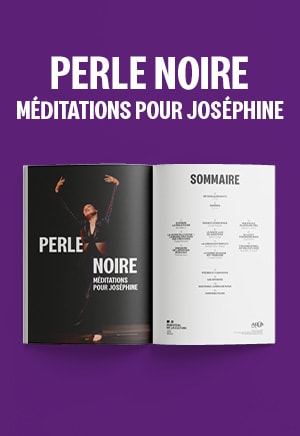
Read them before the performance, during the interval or when you get home from the performance. Our programmes contain detailed information about the works and the cast. Richly illustrated, with exclusive rehearsal photo portfolios, programmes are a must have, a souvenir to be autographed and collected.  

BUY THE PROGRAM
  • Cloakrooms

    Free cloakrooms are at your disposal. The comprehensive list of prohibited items is available here.

  • Bars

    Reservation of drinks and light refreshments for the intervals is possible online up to 24 hours prior to your visit, or at the bars before each performance.

At the Palais Garnier, buy €10 tickets for seats in the 6th category (very limited visibility, two tickets maximum per person) on the day of the performance at the Box offices.

In both our venues, discounted tickets are sold at the box offices from 30 minutes before the show:

  • €35 tickets for under-28s, unemployed people (with documentary proof less than 3 months old) and senior citizens over 65 with non-taxable income (proof of tax exemption for the current year required)
  • €70 tickets for senior citizens over 65

Get samples of the operas and ballets at the Paris Opera gift shops: programmes, books, recordings, and also stationery, jewellery, shirts, homeware and honey from Paris Opera.

Palais Garnier
  • Every day from 10 a.m. to 6:30 p.m. and until performances end
  • Get in from Place de l’Opéra or from within the theatre’s public areas
  • For more information: +33 1 53 43 03 97

Palais Garnier

Place de l'Opéra

75009 Paris

Public transport

Underground Opéra (lignes 3, 7 et 8), Chaussée d’Antin (lignes 7 et 9), Madeleine (lignes 8 et 14), Auber (RER A)

Bus 20, 21, 27, 29, 32, 45, 52, 66, 68, 95, N15, N16

Calculate my route
Car park

Parking Q-Park Edouard VII and Q-Park Meyerbeer 16 rue Bruno Coquatrix 4 rue de la Chaussée d'Antin 75009 Paris

Book your spot at a reduced price
super alt text
super alt text

Read them before the performance, during the interval or when you get home from the performance. Our programmes contain detailed information about the works and the cast. Richly illustrated, with exclusive rehearsal photo portfolios, programmes are a must have, a souvenir to be autographed and collected.  

BUY THE PROGRAM
  • Cloakrooms

    Free cloakrooms are at your disposal. The comprehensive list of prohibited items is available here.

  • Bars

    Reservation of drinks and light refreshments for the intervals is possible online up to 24 hours prior to your visit, or at the bars before each performance.

At the Palais Garnier, buy €10 tickets for seats in the 6th category (very limited visibility, two tickets maximum per person) on the day of the performance at the Box offices.

In both our venues, discounted tickets are sold at the box offices from 30 minutes before the show:

  • €35 tickets for under-28s, unemployed people (with documentary proof less than 3 months old) and senior citizens over 65 with non-taxable income (proof of tax exemption for the current year required)
  • €70 tickets for senior citizens over 65

Get samples of the operas and ballets at the Paris Opera gift shops: programmes, books, recordings, and also stationery, jewellery, shirts, homeware and honey from Paris Opera.

Palais Garnier
  • Every day from 10 a.m. to 6:30 p.m. and until performances end
  • Get in from Place de l’Opéra or from within the theatre’s public areas
  • For more information: +33 1 53 43 03 97

Immerse in the Paris Opera universe

Jean-Pierre Delagarde / OnP

Sign up for our newsletter

Our latest news

* Required fields

By clicking on "submit", you agree to receive electronic communications from the Opéra national de Paris and to the processing of your data.
Learn more about managing your data and your rights.

Back to top