Synopsis
Listen to the synopsis
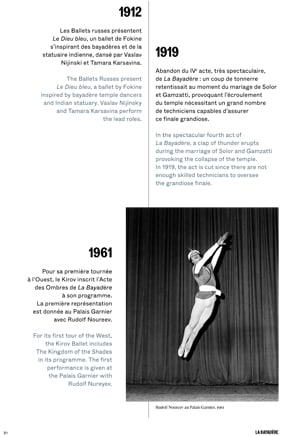
It was on the stage of the Palais Garnier that dancer Rudolf Nureyev revealed himself to Western audiences in 1961, and on the same stage that the choreographer greeted the public for the last time in 1992, with his version of La Bayadère.
His final ballet, adapted from Marius Petipa’s own version, reflects Nureyev’s passion for the great repertoire ballets and his taste for flamboyance.
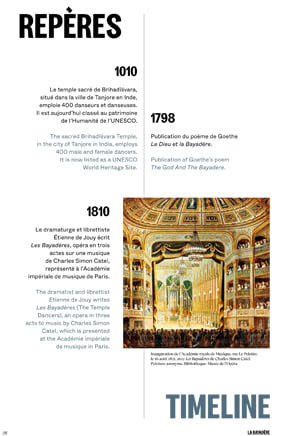
In an imaginary India, where a gigantic elephant parades in front of the rajah’s sumptuous palace and a golden idol follows a fan dance, the ballet tells the story of the thwarted love between the warrior Solor and the bayadère Nikiya, a sacred dancer.
A jewel in the crown of the Paris Opera’s repertoire, La Bayadère dazzles with its virtuoso variations, impressive ensembles and the purity of its “Kingdom of the Shades” scene, during which 32 dancers in white tutus slowly trace their arabesques with a poetry bordering on magic.
Artists
Ballet in three acts
Creative team
-
Rudolf Noureev Choreography after Marius Petipa -
Ludwig Minkus Music (1826‑1917) -
Marius Petipa Libretto -

Sergueï Khoudekov Libretto -
Koen Kessels Conductor -
John Lanchbery Adaptation, arrangement -
Ezio Frigerio Set design -
Franca Squarciapino Costume design -
Vinicio Cheli Lighting design


Cast
- Monday 15 June 2026 at 19:30
- Wednesday 17 June 2026 at 19:30
- Thursday 18 June 2026 at 19:30
- Saturday 20 June 2026 at 19:30
- Sunday 21 June 2026 at 14:30
- Tuesday 23 June 2026 at 19:30
- Wednesday 24 June 2026 at 19:30
- Friday 26 June 2026 at 19:30
- Saturday 27 June 2026 at 19:30
- Monday 29 June 2026 at 19:30
- Tuesday 30 June 2026 at 19:30
- Thursday 02 July 2026 at 19:30
- Friday 03 July 2026 at 19:30
- Sunday 05 July 2026 at 14:30
- Monday 06 July 2026 at 19:30
- Wednesday 08 July 2026 at 19:30
- Thursday 09 July 2026 at 19:30
- Saturday 11 July 2026 at 19:30
- Sunday 12 July 2026 at 14:30
- Tuesday 14 July 2026 at 14:30
-
Sae Eun Park Nikiya -
Paul Marque Solor -
Inès McIntosh Gamzatti -
Thomas Docquir Golden Idol -
Antonio Conforti L' Esclave -
Clara Mousseigne 1st Variation -
Marine Ganio 2nd Variation -
Nine Seropian 3rd Variation


Latest update 30 June 2026, cast is likely to change.
-
Léonore Baulac Nikiya -
Paul Marque Solor -
Bleuenn Battistoni Gamzatti -
Antoine Kirscher Golden Idol -
Florent Melac L' Esclave -
Hohyun Kang 1st Variation -
Inès McIntosh 2nd Variation -
Bianca Scudamore 3rd Variation


Latest update 30 June 2026, cast is likely to change.
-
Sae Eun Park Nikiya -
Paul Marque Solor -
Inès McIntosh Gamzatti -
Antoine Kirscher Golden Idol -
Antonio Conforti L' Esclave -
Clara Mousseigne 1st Variation -
Marine Ganio 2nd Variation -
Nine Seropian 3rd Variation
Latest update 30 June 2026, cast is likely to change.
-
Héloïse Bourdon Nikiya -
Germain Louvet Solor -
Clara Mousseigne Gamzatti -
Shale Wagman Golden Idol -
Florent Melac L' Esclave -
Camille Bon 1st Variation -
Saki Kuwabara 2nd Variation -
Célia Drouy 3rd Variation


Latest update 30 June 2026, cast is likely to change.
-
Dorothée Gilbert Nikiya -
Thomas Docquir Solor -
Roxane Stojanov Gamzatti -
Shale Wagman Golden Idol -
Florent Melac L' Esclave -
Hohyun Kang 1st Variation -
Inès McIntosh 2nd Variation -
Bianca Scudamore 3rd Variation


Latest update 30 June 2026, cast is likely to change.
-
Sae Eun Park Nikiya -
Thomas Docquir Solor -
Inès McIntosh Gamzatti -
Antoine Kirscher Golden Idol -
Antonio Conforti L' Esclave -
Clara Mousseigne 1st Variation -
Marine Ganio 2nd Variation -
Nine Seropian 3rd Variation
Latest update 30 June 2026, cast is likely to change.
-
Léonore Baulac Nikiya -
Paul Marque Solor -
Bleuenn Battistoni Gamzatti -
Shale Wagman Golden Idol -
Florent Melac L' Esclave -
Camille Bon 1st Variation -
Saki Kuwabara 2nd Variation -
Célia Drouy 3rd Variation
Latest update 30 June 2026, cast is likely to change.
-
Dorothée Gilbert Nikiya -
Hugo Marchand Solor -
Roxane Stojanov Gamzatti -
Thomas Docquir Golden Idol -
Florent Melac L' Esclave -
Hohyun Kang 1st Variation -
Inès McIntosh 2nd Variation -
Bianca Scudamore 3rd Variation

Latest update 30 June 2026, cast is likely to change.
-
Héloïse Bourdon Nikiya -
Germain Louvet Solor -
Clara Mousseigne Gamzatti -
Antoine Kirscher Golden Idol -
Thomas Docquir L' Esclave -
Camille Bon 1st Variation -
Saki Kuwabara 2nd Variation -
Célia Drouy 3rd Variation
Latest update 30 June 2026, cast is likely to change.
-
Dorothée Gilbert Nikiya -
Hugo Marchand Solor -
Roxane Stojanov Gamzatti -
Thomas Docquir Golden Idol -
Florent Melac L' Esclave -
Hohyun Kang 1st Variation -
Inès McIntosh 2nd Variation -
Bianca Scudamore 3rd Variation
Latest update 30 June 2026, cast is likely to change.
-
Léonore Baulac Nikiya -
Paul Marque Solor -
Bleuenn Battistoni Gamzatti -
Antoine Kirscher Golden Idol -
Florent Melac L' Esclave -
Clara Mousseigne 1st Variation -
Marine Ganio 2nd Variation -
Nine Seropian 3rd Variation
Latest update 30 June 2026, cast is likely to change.
-
Dorothée Gilbert Nikiya -
Hugo Marchand Solor -
Roxane Stojanov Gamzatti -
Andrea Sarri Golden Idol -
Florent Melac L' Esclave -
Hohyun Kang 1st Variation -
Inès McIntosh 2nd Variation -
Bianca Scudamore 3rd Variation

Latest update 30 June 2026, cast is likely to change.
-
Héloïse Bourdon Nikiya -
Germain Louvet Solor -
Clara Mousseigne Gamzatti -
Antoine Kirscher Golden Idol -
Thomas Docquir L' Esclave -
Camille Bon 1st Variation -
Saki Kuwabara 2nd Variation -
Célia Drouy 3rd Variation
Latest update 30 June 2026, cast is likely to change.
-
Léonore Baulac Nikiya -
Paul Marque Solor -
Bleuenn Battistoni Gamzatti -
Francesco Mura Golden Idol -
Nicola Di Vico L' Esclave -
Camille Bon 1st Variation -
Yeeun Lee 2nd Variation -
Célia Drouy 3rd Variation


Latest update 30 June 2026, cast is likely to change.
-
Sae Eun Park Nikiya -
Paul Marque Solor -
Inès McIntosh Gamzatti -
Lorenzo Lelli Golden Idol -
Antonio Conforti L' Esclave -
Clara Mousseigne 1st Variation -
Marine Ganio 2nd Variation -
Nine Seropian 3rd Variation

Latest update 30 June 2026, cast is likely to change.
-
Léonore Baulac Nikiya -
Guillaume Diop Solor -
Bianca Scudamore Gamzatti -
Andrea Sarri Golden Idol -
Florent Melac L' Esclave -
Clara Mousseigne 1st Variation -
Marine Ganio 2nd Variation -
Nine Seropian 3rd Variation

Latest update 30 June 2026, cast is likely to change.
-
Sae Eun Park Nikiya -
Paul Marque Solor -
Inès McIntosh Gamzatti -
Francesco Mura Golden Idol -
Antonio Conforti L' Esclave -
Camille Bon 1st Variation -
Yeeun Lee 2nd Variation -
Célia Drouy 3rd Variation
Latest update 30 June 2026, cast is likely to change.
-
Léonore Baulac Nikiya -
Guillaume Diop Solor -
Bianca Scudamore Gamzatti -
Francesco Mura Golden Idol -
Florent Melac L' Esclave
Latest update 30 June 2026, cast is likely to change.
-
Hohyun Kang Nikiya -
Thomas Docquir Solor -
Clara Mousseigne Gamzatti -
Andrea Sarri Golden Idol -
Nicola Di Vico L' Esclave
Latest update 30 June 2026, cast is likely to change.
-
Léonore Baulac Nikiya -
Guillaume Diop Solor -
Bianca Scudamore Gamzatti -
Lorenzo Lelli Golden Idol -
Florent Melac L' Esclave
Latest update 30 June 2026, cast is likely to change.
With the Paris Opera Étoiles, Premières Danseuses, Premiers Danseurs and Corps de Ballet
With the participation of students of the Paris Opera Ballet School - The Paris Opera Orchestra
A recording of La Bayadère will be made on 26 and 29 June 2026, coproduced by the Opéra national de Paris, and Bel Air Media, with the participation of France télévisions, with the support of the Orange Foundation, sponsor of the Paris Opera's audiovisual broadcasts.
The ballet will be broadcast at a later date in cinemas worldwide, on France.tv and on Paris Opera Play, the Paris Opera's streaming website.
Media
-
The makeup for the Golden Idol in La Bayadère
Read the article
-
Telling Stories - Héloïse Bourdon in rehearsal
Watch the video
-
TOÏ TOÏ TOÏ - La Bayadère - Meet Nicolas Le Riche, Bleuenn Battistoni and Paul Marque
Watch the video
-
5 questions about La Bayadère
Discover
-
La Bayadère: the true/false story
Discover


-
La Bayadère (saison 25/26) - Bleuenn Battistoni, Paul Marque © Yonathan Kellerman / OnP
-
La Bayadère (saison 25/26) - Léonore Baulac, Paul Marque © Yonathan Kellerman / OnP
-
La Bayadère (saison 25/26) - Antoine Kirscher © Yonathan Kellerman / OnP
-
La Bayadère (saison 25/26) - Daniel Stokes © Yonathan Kellerman / OnP
-
La Bayadère (saison 25/26) - Léonore Baulac © Yonathan Kellerman / OnP
-
La Bayadère (saison 25/26) - Léonore Baulac © Yonathan Kellerman / OnP
-
© Yonathan Kellerman / OnP
-
La Bayadère (saison 25/26) - Paul Marque © Yonathan Kellerman / OnP
-
La Bayadère (saison 25/26) © Yonathan Kellerman / OnP
-
© Yonathan Kellerman / OnP
-
© Yonathan Kellerman / OnP
-
La Bayadère (saison 25/26) - Bleuenn Battistoni © Yonathan Kellerman / OnP
-
La Bayadère (saison 25/26) © Yonathan Kellerman / OnP
-
La Bayadère (saison 25/26) - Léonore Baulac, Paul Marque © Yonathan Kellerman / OnP
-
La Bayadère (saison 25/26) - Paul Marque © Yonathan Kellerman / OnP
-
La Bayadère (saison 25/26) - Paul Marque © Yonathan Kellerman / OnP
-
La Bayadère (saison 25/26) - Bleuenn Battistoni, Paul Marque © Yonathan Kellerman / OnP
-
La Bayadère (saison 25/26) - Bleuenn Battistoni © Yonathan Kellerman / OnP
-
La Bayadère (saison 25/26) - Antoine Kirscher © Yonathan Kellerman / OnP
-
La Bayadère (saison 25/26) - Marine Ganio © Yonathan Kellerman / OnP
-
La Bayadère (saison 25/26) © Yonathan Kellerman / OnP
-
La Bayadère (saison 25/26) - Léonore Baulac © Yonathan Kellerman / OnP
-
La Bayadère (saison 25/26) - Yann Chailloux © Yonathan Kellerman / OnP
-
© Yonathan Kellerman / OnP
-
La Bayadère (saison 25/26) - Léonore Baulac, Paul Marque © Yonathan Kellerman / OnP
-
La Bayadère (saison 25/26) - Léonore Baulac, Paul Marque © Yonathan Kellerman / OnP
-
La Bayadère (saison 25/26) - Léonore Baulac, Florent Melac © Yonathan Kellerman / OnP
-
La Bayadère (saison 25/26) - Léonore Baulac © Yonathan Kellerman / OnP
-
La Bayadère (saison 25/26) - Bleuenn Battistoni, Paul Marque © Yonathan Kellerman / OnP
-
La Bayadère (saison 25/26) - Léonore Baulac © Yonathan Kellerman / OnP
-
La Bayadère (saison 25/26) - Léonore Baulac, Florent Melac © Yonathan Kellerman / OnP
-
La Bayadère (saison 25/26) - Léonore Baulac © Yonathan Kellerman / OnP
-
La Bayadère (saison 25/26) - Léonore Baulac © Yonathan Kellerman / OnP
-
La Bayadère (saison 25/26) - Léonore Baulac, Paul Marque © Yonathan Kellerman / OnP
-
La Bayadère en répétitions (saison 25/26) - Hugo Marchand © Yonathan Kellerman /OnP
-
La Bayadère en répétitions (saison 25/26) - Sae Eun Park © Yonathan Kellerman /OnP
-
La Bayadère en répétitions (saison 25/26) - Marine Ganio © Yonathan Kellerman /OnP
-
La Bayadère en répétitions (saison 25/26) - Germain Louvet © Yonathan Kellerman /OnP
-
La Bayadère en répétitions (saison 25/26) - Chun-Wing Lam © Yonathan Kellerman /OnP
-
La Bayadère en répétitions (saison 25/26) - Roxane Stojanov © Yonathan Kellerman /OnP
-
La Bayadère en répétitions (saison 25/26) - Dorothée Gilbert, Hugo Marchand © Yonathan Kellerman /OnP
-
La Bayadère en répétitions (saison 25/26) - Rubens Simon © Yonathan Kellerman /OnP
-
La Bayadère en répétitions (saison 25/26) - Sae Eun Park, Marc Moreau © Yonathan Kellerman /OnP
-
La Bayadère en répétitions (saison 25/26) - Clara Mousseigne © Yonathan Kellerman /OnP
-
La Bayadère en répétitions (saison 25/26) - Dorothée Gilbert, Hugo Marchand © Yonathan Kellerman /OnP
-
La Bayadère en répétitions (saison 25/26) - Héloïse Bourdon, Germain Louvet © Yonathan Kellerman /OnP
-
La Bayadère en répétitions (saison 25/26) - Bleuenn Battistoni, Léonore Baulac © Yonathan Kellerman /OnP
-
La Bayadère en répétitions (saison 25/26) - Héloïse Bourdon, Germain Louvet © Yonathan Kellerman /OnP


Watch online the recording from season 20/21 on Paris Opera Play!
starring Dorothée Gilbert, Germain Louvet, Léonore Baulac, Amandine Albisson, Hugo Marchand...
Access and services
Opéra Bastille
Place de la Bastille
75012 Paris
Public transport
Underground Bastille (lignes 1, 5 et 8), Gare de Lyon (RER)
Bus 29, 69, 76, 86, 87, 91, N01, N02, N11, N16
Calculate my routeCar park
Parking Indigo Opéra Bastille 1 avenue Daumesnil 75012 Paris
Book your spot at a reduced price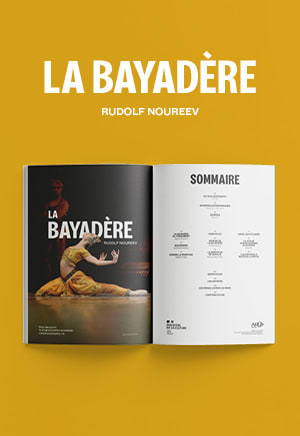
-
Cloakrooms
Free cloakrooms are at your disposal. The comprehensive list of prohibited items is available here.
-
Bars
Reservation of drinks and light refreshments for the intervals is possible online up to 24 hours prior to your visit, or at the bars before each performance.
In both our venues, discounted tickets are sold at the box offices from 30 minutes before the show:
- €25 tickets for under-28s, unemployed people (with documentary proof less than 3 months old) and senior citizens over 65 with non-taxable income (proof of tax exemption for the current year required)
- €40 tickets for senior citizens over 65
Get samples of the operas and ballets at the Paris Opera gift shops: programmes, books, recordings, and also stationery, jewellery, shirts, homeware and honey from Paris Opera.
Opéra Bastille
- Open 1h before performances and until performances end
- Get in from within the theatre’s public areas
- For more information: +33 1 40 01 17 82
Online
Opéra Bastille
Place de la Bastille
75012 Paris
Public transport
Underground Bastille (lignes 1, 5 et 8), Gare de Lyon (RER)
Bus 29, 69, 76, 86, 87, 91, N01, N02, N11, N16
Calculate my routeCar park
Parking Indigo Opéra Bastille 1 avenue Daumesnil 75012 Paris
Book your spot at a reduced price
-
Cloakrooms
Free cloakrooms are at your disposal. The comprehensive list of prohibited items is available here.
-
Bars
Reservation of drinks and light refreshments for the intervals is possible online up to 24 hours prior to your visit, or at the bars before each performance.
In both our venues, discounted tickets are sold at the box offices from 30 minutes before the show:
- €25 tickets for under-28s, unemployed people (with documentary proof less than 3 months old) and senior citizens over 65 with non-taxable income (proof of tax exemption for the current year required)
- €40 tickets for senior citizens over 65
Get samples of the operas and ballets at the Paris Opera gift shops: programmes, books, recordings, and also stationery, jewellery, shirts, homeware and honey from Paris Opera.
Opéra Bastille
- Open 1h before performances and until performances end
- Get in from within the theatre’s public areas
- For more information: +33 1 40 01 17 82
Online

Discover opera and ballet in another way

Dive into the Opera world and get insights on opera and pop culture or ballet and cinema. Scan this code to access all the quiz and blindtests on your mobile.

3 min
La Bayadère
La Bayadère: the true/false story
Some ballets’ stories are completely wild. What about this one, right or wrong?
Discover